BPC-157
One of the most-cited research peptides in the world. 100+ peer-reviewed preclinical studies. 99.1% HPLC-verified purity. 3-lab independent COA on every batch.
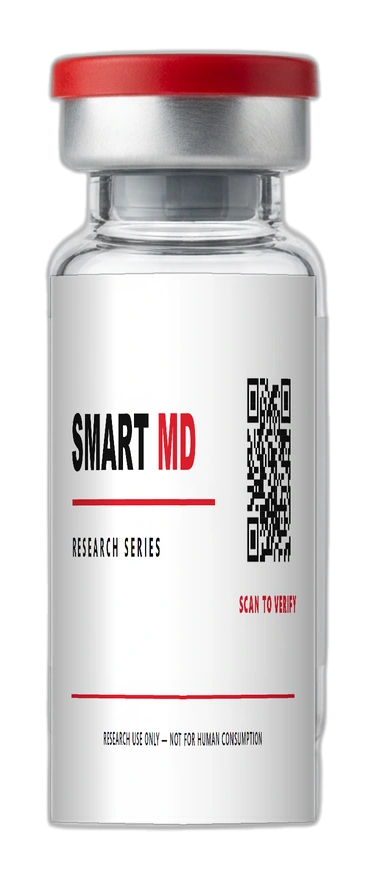
What is BPC-157?
BPC-157 (Body Protection Compound 157) is a 15-amino-acid peptide fragment originally isolated from human gastric juice. It is one of the most extensively studied research peptides in preclinical literature, with over 100 peer-reviewed publications examining its role in musculoskeletal tissue signaling, angiogenesis regulation, gut epithelium support, and tendon-to-bone healing models.
Unlike many research peptides that degrade rapidly in acidic environments, BPC-157 is notably stable in gastric acid — a property that has made it particularly interesting in GI-related preclinical research. Its molecular weight is approximately 1,419 Da.
Published preclinical research areas
Musculoskeletal tissue signaling
Studied in preclinical models of tendon healing, ligament repair, muscle tissue recovery, and bone-tendon junction regeneration. Multiple publications examine its effects on collagen organization and fibroblast migration in tissue repair models.
Angiogenesis regulation
Preclinical studies examine BPC-157's role in new blood vessel formation and vascular repair signaling. Research has explored its interactions with the VEGF pathway and nitric oxide system in tissue vascularization models.
Gut epithelium support
Originally derived from gastric juice, BPC-157 has been studied extensively in preclinical GI models — including gastric ulcer, intestinal damage, and inflammatory bowel models. Its stability in acidic environments is a distinguishing characteristic.
Neuroprotective signaling
Emerging preclinical literature examines BPC-157 in models of dopaminergic and serotonergic pathway modulation, peripheral nerve repair, and CNS injury recovery signaling.
Available formulations at SMART MD
SMART MD quality standard for BPC-157
- HPLC purity analysis — 99.1% average. Identity and purity confirmed via high-performance liquid chromatography.
- Mass spectrometry — molecular weight confirmation at ~1,419 Da. Verifies correct peptide sequence.
- LAL endotoxin assay — <5 EU/mg. Bacterial endotoxin safety verification.
- 3 independent U.S. laboratories — rotating panel. No single lab relationship can compromise verification integrity.
- Lot-specific COA — publicly verifiable at smartmdpeptides.com/verify before you order.
BPC-157 FAQ
Where can I buy research-grade BPC-157?+
Research-grade BPC-157 with 3-lab COA verification is available at SMART MD Peptides in 5mg, 10mg, and 20mg formulations, plus the Wolverine Blend (BPC-157 + TB-500). Every batch is publicly verifiable at smartmdpeptides.com/verify.
What is the purity of SMART MD's BPC-157?+
99.1% average HPLC-verified purity across all BPC-157 batches. Each batch is independently verified by 3 U.S. laboratories — HPLC for purity, mass spectrometry for molecular weight, and LAL endotoxin assay for safety.
What is the Wolverine Blend?+
The Wolverine Blend combines BPC-157 (5mg) and TB-500 (5mg) in a single lyophilized vial. It's SMART MD's most-ordered product. Researchers pair these two compounds for synergistic musculoskeletal recovery models — 150+ combined preclinical references. 99.2% HPLC verified.
Is BPC-157 legal?+
BPC-157 is legal to acquire for research purposes. It is classified as a research-use-only compound — not FDA-approved for therapeutic use, not intended for human consumption. Licensed researchers and physicians may acquire it for use in research protocols. SMART MD provides state-specific compliance documentation with every order.
How should BPC-157 be stored?+
Lyophilized (unreconstituted) BPC-157 should be stored at -20°C, protected from light. Once reconstituted, store at 2-8°C and use within the timeframe specified on your lot-specific documentation.
Ready to verify?
Check the COA before you buy. Compare it against any other supplier's documentation.