EPITHALON
The telomere peptide — studied for telomerase activation in aging models since the 1990s. 30+ peer-reviewed preclinical studies. 3-lab independent COA on every batch.
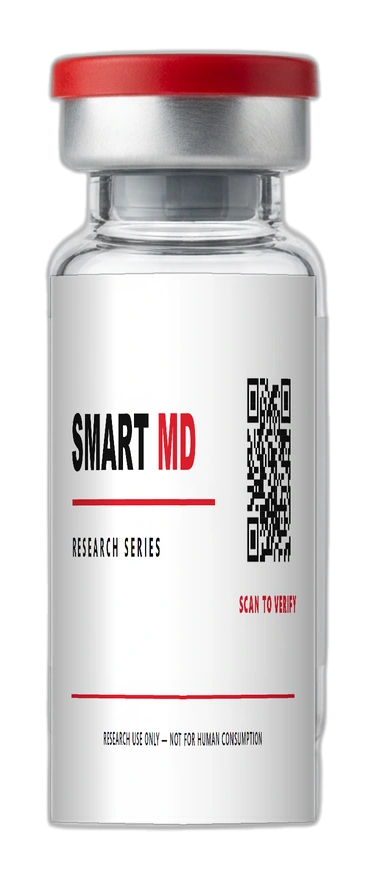
What is Epithalon?
Epithalon (also spelled Epitalon) is a synthetic tetrapeptide with the sequence Ala-Glu-Asp-Gly. It was originally developed by Professor Vladimir Khavinson at the St. Petersburg Institute of Bioregulation and Gerontology in the 1990s as a synthetic analog of the naturally occurring polypeptide epithalamin, which is produced by the pineal gland.
The primary research interest in Epithalon centers on its role in telomerase activation — the enzyme responsible for maintaining telomere length at the ends of chromosomes. Preclinical studies have examined its effects on telomere elongation models, pineal gland function, melatonin production regulation, and broader aging research. Its low molecular weight and simple peptide structure make it highly stable and well-suited for laboratory research.
Published preclinical research areas
Telomerase activation
The most-studied property of Epithalon. Preclinical models have examined its ability to activate telomerase, the enzyme that adds telomeric repeats to chromosome ends. Research suggests potential effects on cellular replicative lifespan in vitro.
Telomere elongation models
Linked to telomerase activation, studies have explored whether Epithalon administration in preclinical models correlates with measurable changes in telomere length — a key biomarker in aging and cellular senescence research.
Pineal gland function
As a synthetic analog of epithalamin, Epithalon has been studied for its effects on pineal gland bioregulation, including potential modulation of melatonin synthesis and circadian rhythm signaling in aging animal models.
Aging research
Broader longevity studies in preclinical models have explored Epithalon's effects on lifespan extension, antioxidant enzyme activity, and age-related changes in gene expression patterns across multiple organ systems.
SMART MD quality standard for Epithalon
- HPLC purity analysis — identity and purity confirmed via high-performance liquid chromatography.
- Mass spectrometry — molecular weight confirmation. Verifies correct tetrapeptide sequence (Ala-Glu-Asp-Gly).
- LAL endotoxin assay — <5 EU/mg. Bacterial endotoxin safety verification.
- 3 independent U.S. laboratories — rotating panel. No single lab relationship can compromise verification integrity.
- Lot-specific COA — publicly verifiable at smartmdpeptides.com/verify before you order.
Frequently paired with Epithalon
Epithalon FAQ
Where can I buy research-grade Epithalon?+
Research-grade Epithalon with 3-lab COA verification is available at SMART MD Peptides in 10mg and 50mg formulations. Every batch is publicly verifiable at smartmdpeptides.com/verify.
What is the purity of SMART MD's Epithalon?+
Every Epithalon batch is third-party tested with a published COA. Each batch is independently verified by 3 U.S. laboratories — HPLC for purity, mass spectrometry for molecular weight, and LAL endotoxin assay for safety.
What is telomerase and why is Epithalon studied for it?+
Telomerase is the enzyme that maintains telomeres — the protective caps at the ends of chromosomes. Telomere shortening is associated with cellular aging. Epithalon has been studied in preclinical models since the 1990s for its potential to activate telomerase activity, making it one of the most-researched peptides in longevity science.
How should Epithalon be stored?+
Lyophilized (unreconstituted) Epithalon should be stored at -20°C, protected from light and moisture. Once reconstituted, store at 2-8°C and use within the timeframe specified on your lot-specific documentation.
Ready to verify?
Check the COA before you buy. Compare it against any other supplier's documentation.