GHK-Cu
The skin peptide — naturally occurs in human plasma, declines with age. 75+ peer-reviewed studies. 3-lab independent COA on every batch.
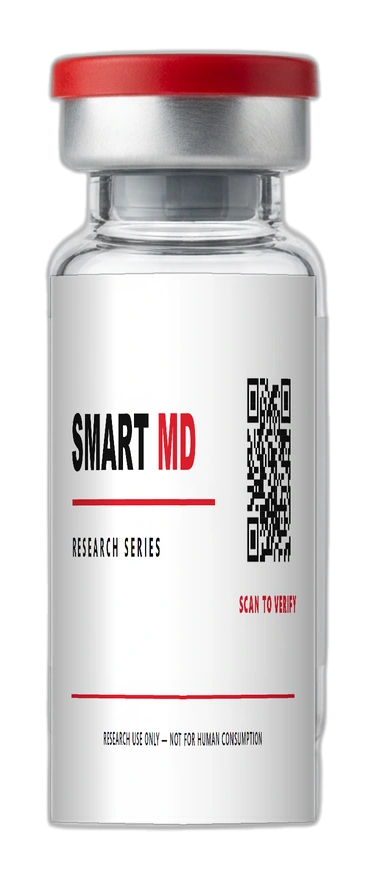
What is GHK-Cu?
GHK-Cu (glycyl-L-histidyl-L-lysine copper complex) is a naturally occurring tripeptide-copper complex found in human plasma, saliva, and urine. First identified in 1973, it has become one of the most extensively studied peptides in skin biology, wound healing, and tissue remodeling research — with over 75 peer-reviewed publications.
Plasma levels of GHK-Cu decline significantly with age — from approximately 200 ng/mL at age 20 to 80 ng/mL by age 60. This age-related decline has made it a primary subject of longevity and regenerative research. The copper ion is essential for its biological activity, facilitating interactions with collagen, decorin, and multiple growth factor pathways.
Published preclinical research areas
Collagen synthesis signaling
Extensively studied for its role in stimulating collagen I, III, and elastin production in dermal fibroblast models. Research demonstrates GHK-Cu's ability to upregulate extracellular matrix protein synthesis and tissue remodeling genes.
Wound healing
Multiple publications examine GHK-Cu's effects on wound contraction, angiogenesis, and inflammatory modulation in tissue repair models. Research shows accelerated wound closure and improved tissue architecture in preclinical wound models.
Longevity skin models
Studied for its effects on skin thickness, elasticity, and photoaging markers. The age-related decline of endogenous GHK-Cu makes it particularly relevant to chronological and UV-induced skin aging research.
Hair follicle regeneration
Preclinical research examines GHK-Cu's effects on hair follicle size, dermal papilla cell proliferation, and the transition from telogen to anagen phase in hair cycle models.
Available formulations at SMART MD
SMART MD quality standard for GHK-Cu
- HPLC purity analysis — identity and purity confirmed via high-performance liquid chromatography.
- Mass spectrometry — molecular weight confirmation of tripeptide-copper complex. Verifies correct peptide-metal coordination.
- LAL endotoxin assay — <5 EU/mg. Bacterial endotoxin safety verification.
- Copper content verification — ICP-MS analysis confirms correct Cu²⁺ stoichiometry for biological activity.
- 3 independent U.S. laboratories — rotating panel. No single lab relationship can compromise verification integrity.
- Lot-specific COA — publicly verifiable at smartmdpeptides.com/verify before you order.
GHK-Cu FAQ
What is GHK-Cu?+
GHK-Cu (glycyl-L-histidyl-L-lysine copper) is a naturally occurring tripeptide-copper complex found in human plasma. It was first isolated in 1973 and has since accumulated over 75 peer-reviewed publications examining its role in collagen synthesis, wound healing, longevity, and hair follicle research.
How is GHK-Cu used in skin research?+
GHK-Cu is studied extensively in dermal fibroblast and skin aging models. Research examines its ability to stimulate collagen I, III, and elastin synthesis, improve skin thickness and elasticity markers, and modulate genes associated with photoaging and chronological aging.
How does GHK-Cu compare to other copper peptides?+
GHK-Cu is the most extensively studied copper peptide in peer-reviewed literature (75+ publications). Unlike synthetic copper peptide derivatives, GHK-Cu is the naturally occurring form found in human plasma. Its tripeptide structure (Gly-His-Lys) provides optimal copper binding affinity for biological activity.
Where can I buy research-grade GHK-Cu?+
Research-grade GHK-Cu with 3-lab COA verification is available at SMART MD Peptides in 50mg, 75mg, and 100mg formulations, plus the Glow Blend (GHK-Cu + BPC-157 + TB-500) and Cosmetic Raw 1g for formulation research. Every batch is publicly verifiable at smartmdpeptides.com/verify.
How should GHK-Cu be stored?+
Lyophilized (unreconstituted) GHK-Cu should be stored at -20°C, protected from light and moisture. The copper complex is stable in lyophilized form. Once reconstituted, store at 2-8°C and use within the timeframe specified on your lot-specific documentation.
Ready to verify?
Check the COA before you buy. Compare it against any other supplier's documentation.