KISSPEPTIN
The master switch of reproduction — controls GnRH release and the entire HPG axis in preclinical models. 25+ peer-reviewed preclinical studies. 3-lab independent COA on every batch.
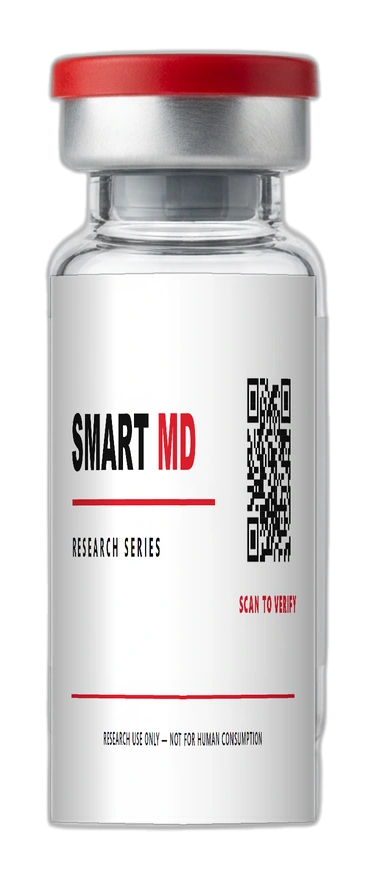
What is Kisspeptin?
Kisspeptin is a neuropeptide encoded by the KISS1 gene, originally discovered in 1996 at the Pennsylvania State University College of Medicine. It was initially identified as a metastasis suppressor, but its role in reproductive endocrinology — specifically as the master regulator of the hypothalamic-pituitary-gonadal (HPG) axis — has become its primary research focus.
Kisspeptin acts on the GPR54 (KISS1R) receptor on GnRH neurons in the hypothalamus, triggering gonadotropin-releasing hormone (GnRH) secretion. This single signaling event initiates the entire downstream cascade of LH and FSH release from the pituitary, making kisspeptin the upstream "master switch" of reproductive hormone regulation. Research has examined its roles in puberty onset, fertility, and HPG axis modulation.
Published preclinical research areas
GnRH neuron activation
Kisspeptin is the most potent known stimulator of GnRH secretion. It binds to KISS1R on GnRH neurons in the hypothalamus, triggering pulsatile GnRH release. Research examines its signaling kinetics, receptor desensitization patterns, and dose-response relationships.
Reproductive endocrinology
As the upstream regulator of the entire HPG axis, kisspeptin research spans LH/FSH regulation, ovulation models, spermatogenesis, and sex steroid feedback loops. It has become central to understanding the neuroendocrine control of reproduction.
HPG axis regulation
Preclinical studies explore kisspeptin's role in modulating the hypothalamic-pituitary-gonadal axis — including its interactions with neurokinin B and dynorphin in the "KNDy neuron" model, which is the current paradigm for understanding GnRH pulse generation.
Puberty onset & fertility research
Loss-of-function mutations in KISS1 or KISS1R cause hypogonadotropic hypogonadism and absent puberty. Research explores kisspeptin's role in puberty timing, seasonal breeding regulation, and potential applications in fertility protocol research.
Available formulations at SMART MD
SMART MD quality standard for Kisspeptin
- HPLC purity analysis — identity and purity confirmed via high-performance liquid chromatography.
- Mass spectrometry — molecular weight confirmation. Verifies correct KISS1-derived peptide sequence.
- LAL endotoxin assay — <5 EU/mg. Bacterial endotoxin safety verification.
- 3 independent U.S. laboratories — rotating panel. No single lab relationship can compromise verification integrity.
- Lot-specific COA — publicly verifiable at smartmdpeptides.com/verify before you order.
Frequently paired with Kisspeptin
Kisspeptin FAQ
Where can I buy research-grade Kisspeptin?+
Research-grade Kisspeptin with 3-lab COA verification is available at SMART MD Peptides in a 5mg formulation. Every batch is publicly verifiable at smartmdpeptides.com/verify.
Why is Kisspeptin called the "master switch" of reproduction?+
Kisspeptin sits at the very top of the reproductive hormone cascade. It activates GnRH neurons, which trigger LH and FSH release, which in turn stimulate the gonads. Without functional kisspeptin signaling, the entire HPG axis goes silent — as demonstrated by loss-of-function mutations that cause absent puberty and infertility in preclinical and clinical genetic studies.
What is the purity of SMART MD's Kisspeptin?+
Each batch is independently verified by 3 U.S. laboratories — HPLC for purity, mass spectrometry for molecular weight, and LAL endotoxin assay for safety.
How should Kisspeptin be stored?+
Lyophilized (unreconstituted) Kisspeptin should be stored at -20°C, protected from light and moisture. Once reconstituted, store at 2-8°C and use within the timeframe specified on your lot-specific documentation.
Ready to verify?
Check the COA before you buy. Compare it against any other supplier's documentation.