NAD+
Foundational coenzyme in every living cell — declines 50% by age 50 in research models. 500+ published references across aging research.
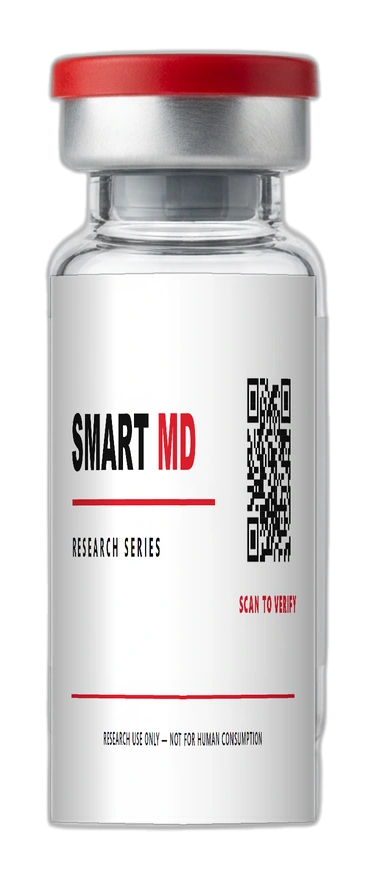
What is NAD+?
NAD+ (Nicotinamide Adenine Dinucleotide) is a foundational coenzyme present in every living cell. It is essential for over 500 enzymatic reactions — serving as a critical electron carrier in cellular energy metabolism, a substrate for DNA repair enzymes (PARPs), and an activator of sirtuins (longevity-associated proteins).
Research has demonstrated that NAD+ levels decline approximately 50% by age 50 in preclinical models — a decline associated with mitochondrial dysfunction, impaired DNA repair capacity, and accelerated cellular aging markers. This age-related decline has made NAD+ one of the most intensively studied molecules in longevity and aging research.
Published research areas
Cellular energy metabolism
NAD+ is the primary electron carrier in mitochondrial oxidative phosphorylation — the process that generates 90%+ of cellular ATP. Research examines how NAD+ availability directly impacts metabolic output, exercise capacity, and cellular energy production in aging models.
DNA repair signaling
NAD+ is consumed as a substrate by PARP enzymes (Poly ADP-Ribose Polymerase) during DNA damage repair. Published research examines how declining NAD+ levels impair DNA repair capacity, leading to accumulated genomic instability in aging cellular models.
Sirtuin activation
Sirtuins (SIRT1-7) are NAD+-dependent deacetylases linked to longevity in research models. Studies examine how NAD+ availability regulates sirtuin activity — impacting gene expression, mitochondrial biogenesis, inflammation, and stress resistance pathways.
Mitochondrial function
Research examines NAD+'s role in maintaining mitochondrial membrane potential, electron transport chain efficiency, and mitophagy (damaged mitochondria clearance). Age-related NAD+ decline is associated with mitochondrial dysfunction in preclinical aging models.
Available formulations at SMART MD
SMART MD quality standard for NAD+
- HPLC purity analysis — identity and purity confirmed via high-performance liquid chromatography.
- Mass spectrometry — molecular weight confirmation at 663.43 Da. Verifies correct NAD+ molecular structure.
- LAL endotoxin assay — <5 EU/mg. Bacterial endotoxin safety verification.
- 3 independent U.S. laboratories — rotating panel. No single lab relationship can compromise verification integrity.
- Lot-specific COA — publicly verifiable at smartmdpeptides.com/verify before you order.
NAD+ FAQ
What is NAD+?+
NAD+ (Nicotinamide Adenine Dinucleotide) is a coenzyme found in every living cell, essential for over 500 enzymatic reactions. It plays critical roles in cellular energy metabolism, DNA repair, and sirtuin activation. Research shows NAD+ levels decline approximately 50% by age 50, making it one of the most studied molecules in aging research with 500+ published references.
Where can I buy research-grade NAD+?+
Research-grade NAD+ with 3-lab COA verification is available at SMART MD Peptides in a 1000mg formulation. Every batch is publicly verifiable at smartmdpeptides.com/verify.
How is NAD+ studied in research?+
NAD+ is studied across multiple research contexts: cellular energy metabolism (mitochondrial function and ATP production), DNA repair (as a PARP substrate), longevity signaling (sirtuin activation), neurodegeneration models, and age-related metabolic decline. It is administered in preclinical models via multiple routes to examine bioavailability and tissue-specific effects.
What is the difference between NAD+, NMN, and NR?+
NAD+ is the active coenzyme itself. NMN (Nicotinamide Mononucleotide) and NR (Nicotinamide Riboside) are precursors — molecules that cells convert into NAD+. Research-grade NAD+ provides the active molecule directly, bypassing the conversion steps required by precursor compounds. Each has distinct research applications and bioavailability profiles.
How should NAD+ be stored?+
Lyophilized (unreconstituted) NAD+ should be stored at -20°C, protected from light and moisture. NAD+ is sensitive to heat and humidity — proper storage is critical for maintaining potency. Once reconstituted, store at 2-8°C and use within the timeframe specified on your lot-specific documentation.
Ready to verify?
Check the COA before you buy. Compare it against any other supplier's documentation.